Alright. No influencer gyaan, no brochure language, no “10 rules” nonsense.
This is how an actual insurance professional evaluates a health policy in India.
Step 1: First accept an uncomfortable truth
There is NO “best” health insurance policy.
There is only:
Best policy for your age, health, city, hospital preference, and risk tolerance.
Anyone claiming “one plan fits all” is either selling or clueless.
Step 2: Fix the biggest mistake Indians make
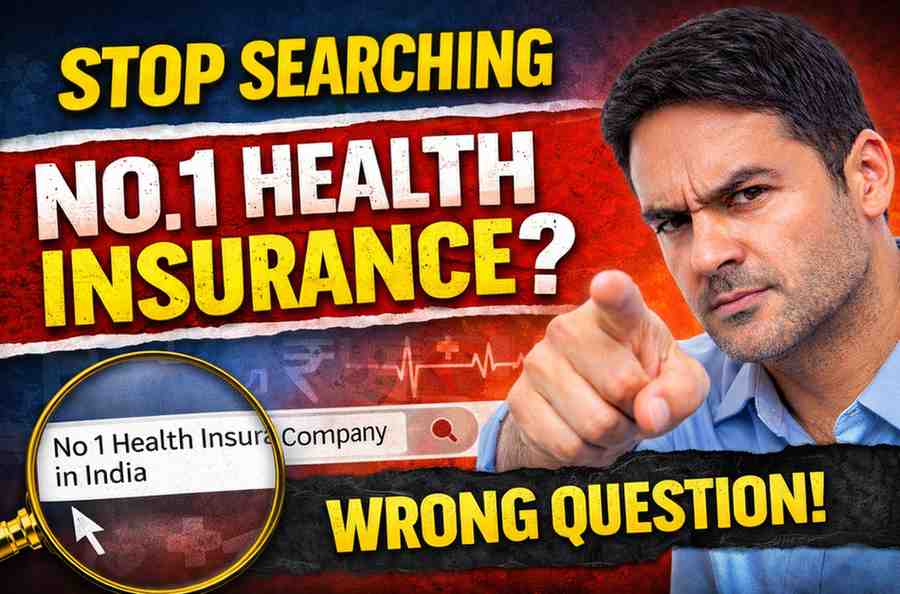
Stop asking: “Which company is best?”
Start asking:
“Which policy wording will hurt me the least during a claim?”
Insurance is not sold in ads.
It is paid during claims.
Step 3: Decide SUM INSURED properly (not randomly)
This is where most people screw up.
Rule of thumb (urban India):
Tier 1 city → minimum ₹45–50 lakh
Tier 2 city → minimum ₹25–30 lakh
Why?
ICU + 5–7 days hospital = ₹4–6 lakh today
Add surgery, implants, doctor fees → bill explodes
Medical inflation is 12–15%, not 5% like LIC agents say
If your cover is ₹5 lakh, you’re underinsured. Period.
Step 4: Use the “Base + Super Top-up” strategy (professionals always do this)
Instead of:
Buying one expensive ₹20 lakh policy
Do this:
Base policy: ₹5–10 lakh
Super top-up: ₹95–90 lakh with deductible = base cover
Why?
Cheaper
More flexible
Easier to upgrade later
Saves premium long term
Influencers rarely explain this because it doesn’t look sexy.
Step 5: Hospital list is more important than company name
Ask ONE brutal question:
“Which hospitals near my house are cashless under THIS EXACT policy?”
Not:
“Pan-India network”
“10,000+ hospitals”
“Largest network”
Those numbers are marketing garbage.
If your preferred hospital isn’t on the list → policy is useless.
Step 6: Read ONLY these parts of the policy wording
Forget the full 100-page PDF.
Focus on these landmines:
1️⃣ Room rent limits
Avoid plans with room rent caps
They silently reduce every bill component
2️⃣ Disease-wise sub-limits
Cataract, hernia, knee replacement caps = bad sign
Modern plans should NOT have them
3️⃣ Pre-existing disease waiting
Standard is 2–4 years
Shorter is better
Zero waiting usually means higher premium or more fine print
4️⃣ Consumables clause
Gloves, syringes, masks, PPE, sutures
If not covered → ₹20–50k out of pocket easily
Step 7: Claim Settlement Ratio is overrated (hard truth)
High CSR ≠ claim-friendly.
Why?
Small claims inflate CSR
Group policies distort numbers
Doesn’t show how claims are rejected
What matters more:
Claim complaints ratio
How many escalations go to ombudsman
How insurer behaves in big ICU claims
This info is never in ads.
Step 8: Cashless ≠ Hassle-free
Even cashless claims get:
Room downgrades
Partial approvals
“Medical necessity” objections
So ask:
Is claim handled by insurer or third-party admin?
Is pre-authorization quick or painful?
Professionals prefer insurers with in-house claims, not outsourced TPAs.
Step 9: Co-pay is not evil (if you understand it)
Co-pay is bad ONLY when:
Forced after age 60
Hidden inside disease clauses
Voluntary co-pay:
Can reduce premium
Works for people with strong savings
Blindly rejecting co-pay = amateur thinking.
Step 10: Avoid these “popular” traps
❌ Return of premium plans
❌ Daily hospital cash add-ons
❌ Fancy wellness apps
❌ Free health checkups (worth peanuts)
❌ Influencer discount codes
Insurance is about claims, not cashback.
Step 11: Buy early, upgrade later (this matters a lot)
Health insurance should be bought:
When you’re healthy
Before lifestyle diseases kick in
Then:
Increase cover
Add top-ups
Never break continuity
Switching later = underwriting hell.
Final Professional Checklist (print-worthy)
If a policy passes at least 8/10, it’s good:
✅ Adequate sum insured
✅ No room rent limit
✅ No disease sub-limits
✅ Consumables covered
✅ Lifetime renewal
✅ Good local hospital network
✅ Reasonable waiting period
✅ Super top-up compatible
✅ Clean claim process
❌ Minimal gimmicks
One honest line to end this:
Health insurance is not for saving tax or premium.
It is for protecting assets during your worst 10 days.