Health insurance is meant to provide financial protection during medical emergencies. People buy health insurance policies with the expectation that their hospital expenses will be covered when needed. However, many policyholders in India face an unpleasant surprise when their health insurance claim gets rejected.
Claim rejection can create financial stress, especially when the hospital bills are large. In many cases, policyholders believe the insurance company has denied the claim unfairly. But in reality, most claim rejections happen because certain policy conditions were not understood or followed properly.
Insurance policies are legal contracts, and they contain specific rules about what is covered and what is not. If a claim does not meet those conditions, the insurer may reject it.
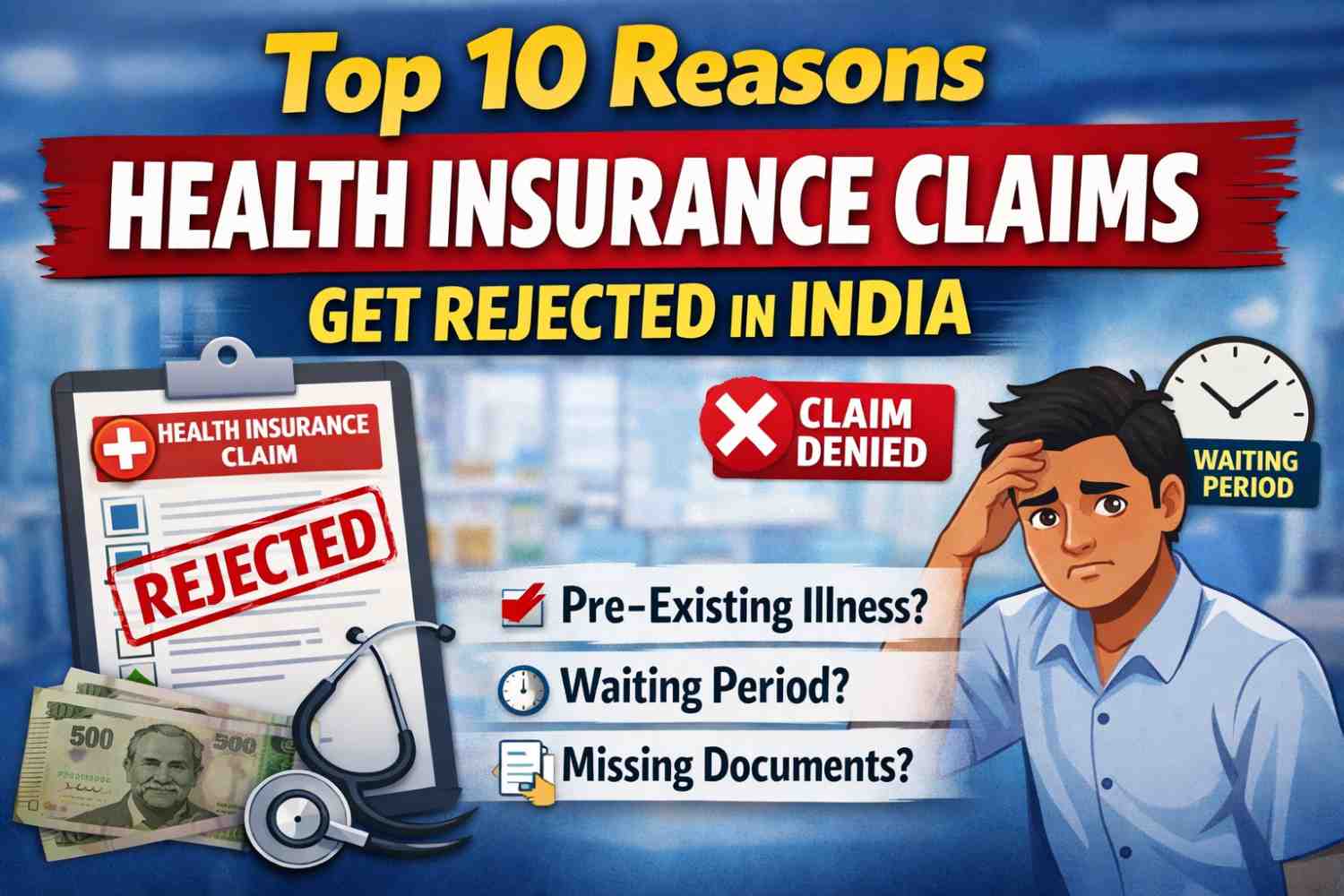
Understanding the common reasons for claim rejection can help policyholders avoid mistakes and ensure smoother claim settlement. Below are the top 10 reasons why health insurance claims get rejected in India.
1. Non-Disclosure of Pre-Existing Diseases
One of the most common reasons for claim rejection is non-disclosure of pre-existing medical conditions.
When you apply for health insurance, the insurance company asks questions about your medical history. These may include conditions such as:
- Diabetes
- Hypertension
- Heart disease
- Thyroid disorders
- Previous surgeries
If a policyholder hides or fails to disclose such conditions, the insurance company may reject the claim later.
For example, if someone had diabetes before buying the policy but did not mention it in the proposal form, and later files a claim for complications related to diabetes, the insurer may treat it as misrepresentation and deny the claim.
Honesty while filling the proposal form is extremely important.
2. Waiting Period Conditions
Most health insurance policies have waiting periods for certain illnesses or treatments.
Typical waiting periods include:
- 30 days initial waiting period for most illnesses
- 1–2 years for specific diseases
- 2–4 years for pre-existing conditions
If a claim is filed for a treatment during the waiting period, the insurance company may reject it.
For example, if a person buys a policy today and gets hospitalized for a medical condition within the first 30 days, the claim may not be covered unless it is an accident.
Many policyholders overlook waiting period clauses while buying insurance.
3. Treatment Not Covered Under Policy
Health insurance policies contain exclusions, which are treatments or expenses that are not covered.
Common exclusions include:
- Cosmetic procedures
- Fertility treatments
- Dental treatments (unless due to accident)
- Experimental treatments
- Certain alternative therapies
If a policyholder undergoes a treatment that falls under policy exclusions, the claim may be rejected.
It is important to carefully read the policy wording to understand what treatments are excluded.
4. Treatment at a Non-Network Hospital (Cashless Claims)
For cashless claims, treatment must usually be taken at a network hospital.
Network hospitals have agreements with the insurance company to provide cashless services. If a patient goes to a hospital that is not part of the insurer’s network, the cashless facility may not be available.
In such cases, the policyholder may need to pay the hospital bill first and later apply for reimbursement.
If proper procedures are not followed, cashless claims may be denied.
5. Incorrect or Incomplete Documentation
Health insurance claims require proper documentation.
Common documents required include:
- Hospital bills
- Discharge summary
- Medical reports
- Doctor prescriptions
- Claim form
- Identity proof
If any important document is missing or incorrect, the insurance company may reject the claim.
For example, if hospital bills are incomplete or diagnostic reports are missing, the insurer may not process the claim.
Always ensure that all required documents are submitted correctly.
6. Policy Lapse Due to Non-Payment of Premium
Health insurance policies remain active only if premiums are paid on time.
If a policyholder misses the renewal payment and the policy lapses, any claim made during the inactive period may be rejected.
Although many policies provide a grace period, coverage may not apply if the premium remains unpaid beyond that period.
Therefore, timely policy renewal is essential to maintain coverage.
7. Claim Filed After the Time Limit
Insurance companies usually require claims to be reported within a specific time frame.
For example:
- Cashless claims should be informed before or during hospitalization.
- Reimbursement claims must usually be submitted within 15–30 days after discharge.
If the policyholder delays claim notification or submission of documents, the insurer may reject the claim.
Prompt communication with the insurance company is important during hospitalization.
8. Treatment Not Medically Necessary
Insurance companies may reject claims if they believe the treatment was not medically necessary.
For instance:
- Unnecessary hospitalization
- Tests or procedures not recommended by doctors
- Admission only for diagnostic purposes
If medical justification is not clear, the insurer may refuse the claim.
Hospitals sometimes admit patients for short observation periods that may not qualify as medically necessary hospitalization under policy terms.
9. Fraudulent or Suspicious Claims
Insurance companies carefully review claims to detect possible fraud.
Claims may be rejected if the insurer suspects:
- Fake medical bills
- Fabricated hospital records
- Inflated treatment costs
- False hospitalization claims
Fraudulent claims can also lead to policy cancellation or legal consequences.
Policyholders should always ensure that their claims are genuine and properly documented.
10. Policy Exceeding Coverage Limits
Every health insurance policy has a sum insured, which is the maximum amount the insurer will pay.
If hospital expenses exceed the sum insured and no additional coverage such as restoration or top-up exists, the insurer will only pay up to the policy limit.
In some cases, policyholders misunderstand coverage limits and assume all expenses will be paid.
Understanding the coverage amount is important when choosing a health insurance policy.
How to Avoid Health Insurance Claim Rejection
Although claim rejections can happen, most issues can be avoided by following a few simple precautions:
Be Honest During Policy Purchase
Always disclose your complete medical history.
Understand Policy Terms
Read the policy document carefully, including exclusions and waiting periods.
Choose the Right Coverage
Select an adequate sum insured based on healthcare costs in your city.
Maintain Proper Documentation
Keep all medical records and hospital bills organized.
Inform the Insurer Quickly
Notify the insurance company as soon as hospitalization occurs.
Renew Your Policy on Time
Ensure that the policy remains active without lapses.
Final Thoughts
Health insurance is an essential financial safeguard, but understanding the terms and conditions of your policy is equally important. Many claim rejections occur because policyholders are unaware of policy rules or procedural requirements.
By learning the common reasons behind claim rejection, you can take preventive steps and ensure that your health insurance works effectively when you need it the most.
Being informed and proactive can make a significant difference in ensuring a smooth claim settlement experience.
Frequently Asked Questions
Can a health insurance claim be rejected after approval?
Yes, in rare situations claims may be re-evaluated if the insurance company discovers incorrect information or missing disclosures in the policy application.
What should I do if my health insurance claim is rejected?
You can first raise a complaint with the insurance company. If the issue is not resolved, you may approach the insurance grievance cell or the **Insurance Regulatory and Development Authority of India grievance system.
How long does health insurance claim settlement take?
Most insurers settle reimbursement claims within 15–30 days after receiving all required documents.
Can a rejected claim be appealed?
Yes. Policyholders can submit additional documents or file a review request with the insurer.
About the Author
Health Insurance Sahi Hai provides practical guidance on health insurance policies, claim processes, and consumer awareness in India. Our aim is to help policyholders understand insurance policies clearly and avoid common mistakes during claims.