www.HealthInsuranceSahiHai.com — Sumit Bhandari, Fee-Based Health Insurance Consultant, Vrindavan
वो रात जब Ramesh को पता चला — Policy थी, पर Insurance नहीं था
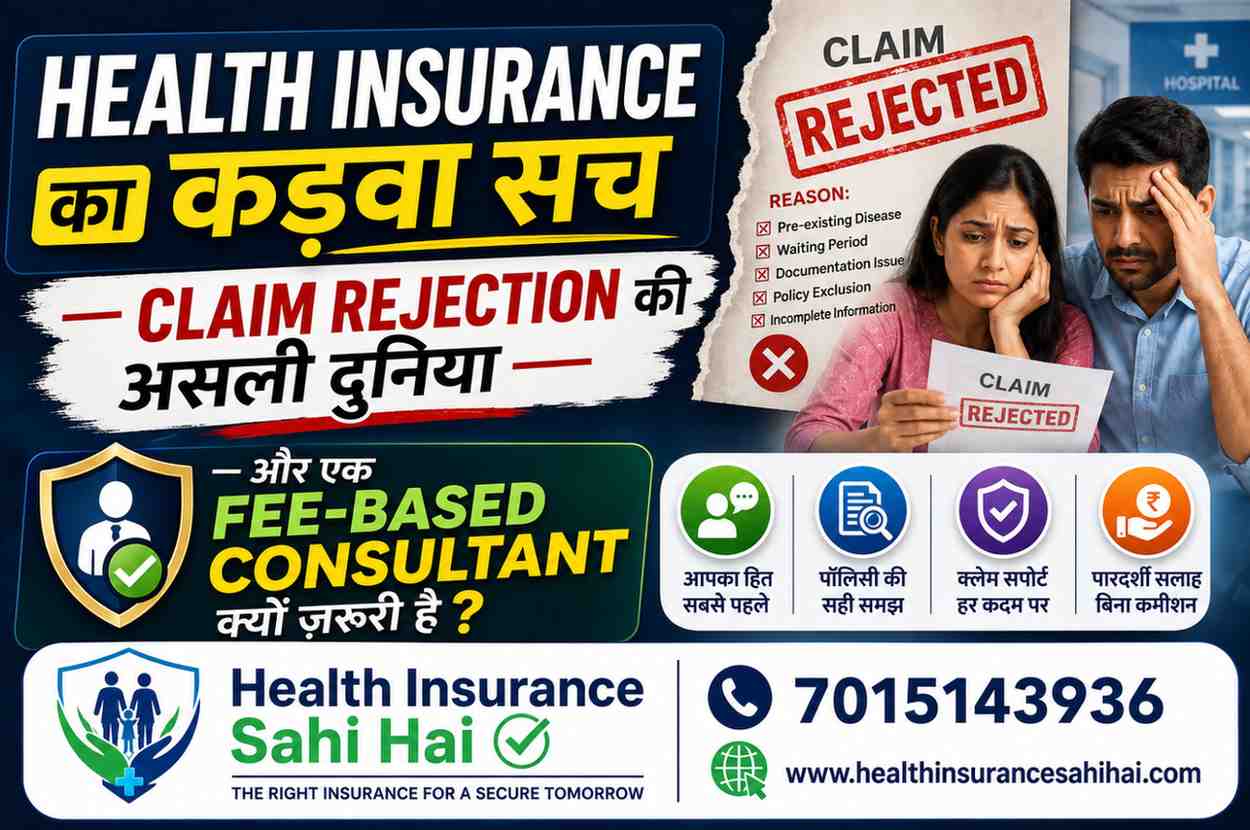
Health Insurance का कड़वा सच — Claim Rejection की असली दुनिया — और एक Fee-Based Consultant क्यों ज़रूरी है
प्रस्तावना — Lucknow के एक ICU के बाहर
रात के 2 बज रहे थे।
Ramesh Gupta — 48 साल — ICU के बाहर plastic chair पर बैठे थे।
अंदर — उनकी माँ। Heart attack। Serious।
Pocket में — एक health insurance policy। ₹50,000 annual premium। 5 साल से भर रहे थे।
“Koi tension nahi। Insurance hai।”
यही सोचते थे।
Hospital के billing counter पर — एक clerk ने कहा:
“Sir, insurance company ने pre-authorization deny किया है। आपको cash deposit करना होगा। ₹3 लाख।”
“क्यों? मेरी policy है।”
“Sir, आपकी माँ की condition — pre-existing है। Policy में waiting period है। Cashless नहीं मिलेगा।”
Ramesh का phone बजा।
Insurance company का number था।
“Sir, हम sorry हैं। इस case में हम cover नहीं कर सकते। आपकी policy में Clause 4.2.1 है जिसके अनुसार—”
Ramesh ने phone रख दिया।
5 साल। ₹2.5 लाख premium।
और आज — जब ज़रूरत थी —
कुछ नहीं।
उसी रात — एक number मिला।
Sumit Bhandari — Fee-Based Health Insurance Consultant। Vrindavan।
Ramesh ने call किया। रात के 3 बजे।
Phone उठा।
“Bhandari ji, मेरी माँ ICU में हैं। Insurance ने reject किया। मुझे नहीं पता क्या करूँ।”
“कौन सी company है? Policy कितने साल पुरानी है? Rejection letter मिला?”
तीन सवाल।
No sympathy speech। No “don’t worry।”
Direct। Focused।
और उस रात — वो conversation — Ramesh की ज़िंदगी बदल गई।
भाग एक — India का Health Insurance Crisis — Real Numbers
IRDAI की annual report के अनुसार — FY 2024-25 में health insurance claims worth ₹30,000 crore reject या repudiate हुए — पिछले साल से 15% ज़्यादा। यह real money है — real लोगों को — उनकी ज़िंदगी के सबसे बुरे वक्त में — deny किया गया।
India में insurance companies ने March 2024 तक health claims का 11% reject किया और 6% pending रखा। FY24 में ₹26,000 crore की policies disallow और repudiate हुईं — पिछले साल से 19.10% ज़्यादा।
यह numbers — statistics नहीं हैं।
यह Ramesh जैसे लाखों लोग हैं।
ICU के बाहर बैठे। रात को। Alone। Broken।
Council for Insurance Ombudsmen की 2024-25 Annual Report के अनुसार — 17 Ombudsman offices ने 53,184 complaints receive कीं। इनमें से 71% policyholders के favor में resolve हुईं। Health insurance disputes कुल complaints का 64% थे।
71% cases में policyholder सही था।
पर उन्हें लड़ना पड़ा।
बिना knowledge के कौन लड़ेगा?
भाग दो — Claim Rejection की असली दुनिया — वो छह कारण जो कोई नहीं बताता
Sumit Bhandari ने Ramesh को समझाया।
“Ramesh ji, rejection — अचानक नहीं होती। यह एक system है। समझो।”
कारण 1 — Company का Claim Ratio Management
यह सबसे hidden reality है।
हर insurance company — एक business है।
उनका goal — profit।
Combined Ratio — यह वो metric है जो company की health बताता है।
Combined Ratio = (Claims Paid + Operating Expenses) / Premium Collected
अगर यह 100% से ऊपर — company loss में।
अगर नीचे — profit में।
जब claims ज़्यादा आती हैं — companies internally pressure डालती हैं claims department पर।
“Scrutinize more।”
“Find grounds to deny।”
यह explicit नहीं होता। Written नहीं होता।
पर culture बन जाता है।
Insurers with stronger service records benefit from lower churn, higher renewal rates, and reduced combined ratios। Complaint-heavy insurers risk adverse selection — where healthier policyholders exit and higher-risk pools remain — raising claims ratios further।
Simple language में:
जब एक company बहुत reject करती है — smart policyholders उसे छोड़ देते हैं।
सिर्फ sick और high-risk लोग रहते हैं।
Claim ratio और बढ़ता है।
Company और ज़्यादा reject करती है।
यह एक spiral है।
और उस spiral में — Ramesh जैसे लोग पिसते हैं।
कारण 2 — Financial Backup की असलियत
हर company का Solvency Ratio होता है।
IRDAI mandate करता है — minimum 1.5।
पर कुछ companies — barely compliant हैं।
जब company financially stressed हो:
— Claims processing slow।
— Scrutiny ज़्यादा।
— Rejection grounds ढूँढे जाते हैं।
Policyholder को नहीं पता:
कि जिस company से policy ली — उसकी financial health क्या है।
Agent ने नहीं बताया।
Website पर fancy था।
पर Solvency Ratio — 1.52।
Barely above minimum।
Fee-based consultant का काम:
Company की financial health check करना।
Claim settlement ratio देखना।
Before recommending।
कारण 3 — Regulatory Changes और उनका Impact
IRDAI rules: 36-month waiting periods for pre-existing diseases, 5-year moratorium protection (claims cannot be rejected after 5 years of continuous coverage), 1-hour cashless pre-authorisation, और lifetime renewability regardless of age or claim history।
IRDAI के 2026 enforcement drive में — July 1, 2026 से insurers जो 95% claim settlement compliance नहीं meet करते — उन पर ₹2 lakh per violation penalty। IRDAI का new IT portal 5,000 claims daily audit करता है।
यह good news है।
पर problem यह है — rules बदलते रहते हैं।
2024 का Master Circular।
2025 का GST exemption — individual health insurance।
2026 का enforcement drive।
हर बदलाव — policyholder के लिए — confusing।
IRDAI ने 2024 में नया regulation जारी किया — “Want of Documents” पर कोई claim reject नहीं होगा। सिर्फ essential documents — directly claim से related — माँगे जा सकते हैं।
पर क्या Ramesh को यह पता था?
नहीं।
क्योंकि agent ने नहीं बताया।
क्योंकि कोई fee-based consultant नहीं था।
कारण 4 — Documentation का जाल
Q4 2025 में reimbursement rejections में 32% से ज़्यादा — illegible या incomplete discharge summaries की वजह से थे। यह सबसे fixable reason है।
“Illegible discharge summary।”
Doctor की handwriting।
Hospital के nurse ने form भरा — गलत spelling।
Diagnosis code — ICD-10 में — wrong।
और claim reject।
Most common rejection reasons: Non-disclosure of pre-existing disease, waiting period not over, sub-limit exhausted (room rent cap, ICU cap), “not a hospital” definition failures, day-care procedure not in listed schedule, “investigation only” admissions of less than 24 hours।
Room rent cap:
Ramesh की policy में — room rent cap था ₹3,000/day।
Hospital room था ₹6,000/day।
Double।
Proportionate deduction:
सब कुछ — doctor fees, medicines, procedures — proportionately cut।
₹2 लाख का claim — ₹80,000 मिला।
Ramesh को नहीं पता था।
कारण 5 — Agent का Conflict of Interest
यह सबसे important truth है।
Traditional insurance agent:
Commission-based।
Policy बेचता है — commission मिलता है।
Claim में — उसका interest? Zero।
क्या वो बताएगा:
— Room rent cap के बारे में?
— Waiting period की details?
— Co-payment clause?
— Sub-limits?
नहीं।
क्योंकि अगर बताया — तो policy complicated लगेगी।
Policy नहीं बिकेगी।
Commission नहीं मिलेगा।
43% policyholders in India reported difficulties in claim processing — rejections due to “pre-existing conditions” to opaque exclusions hidden in fine print।
“Fine print।”
जो agent ने explain नहीं किया।
जो policyholder ने नहीं पढ़ा।
जो claim time पर reality बनकर सामने आया।
कारण 6 — Hospital और Insurer का खेल
Between inflated hospital bills, opaque insurer exclusions and a claims process that places nearly all the burden of proof on a patient who is often sick and disoriented, the system has evolved।
Hospitals inflate bills।
Insurers cut them।
Patient — बीच में।
Hospital कहता है — “Insurer ने कम pay किया।”
Insurer कहता है — “Hospital ने inflated bill दिया।”
Patient दोनों से लड़ता है।
Sick होने के बाद।
Alone।
IRDAI इस पर act कर रहा है।
IRDAI — hospitals और insurance companies के बीच contracts को govern करने के लिए strict code of conduct prepare कर रहा है — highest regulatory level पर acknowledgment कि system policyholder को fail कर रहा है।
पर अभी तक — यह war zone है।
जिसमें informed consumer ही survive करता है।
भाग तीन — विदेश में क्या हुआ — और India में क्या होगा
UnitedHealthcare CEO Brian Thompson की US में shocking murder — reportedly denied claims पर grievances से motivated — ने global debate ignite किया। US में 43% policyholders ने claim processing में difficulties report कीं। Premiums — 50% surge for one in five policyholders।
यह extreme case था।
पर symptom — universal है।
US का सबक
America में — managed care के नाम पर — insurance companies इतनी powerful हो गईं कि वो doctor से भी ऊपर हो गईं।
Doctor कहता — “Patient को यह treatment चाहिए।”
Insurance company कहती — “हम approve नहीं करते।”
Prior Authorization — एक bureaucratic torture।
Step Therapy — “पहले सस्ती दवा try करो, चाहे doctor ने नहीं बोला।”
Out-of-Network penalties — Doctor network में नहीं तो — 50% patient pay करे।
Result:
— Public outrage।
— Congressional hearings।
— State-level regulations।
— And ultimately — CEO की murder।
UK का NHS — दूसरा extreme
UK में — NHS। Government healthcare।
Free। Universal।
पर — waiting lists।
6 महीने की surgery wait।
2 साल की specialist appointment।
Middle class ने private insurance लिया।
Private और NHS — दो tier system।
Rich better care। Poor waiting list।
Australia का model
Australia ने Medicare (public) + Private insurance blend किया।
पर private insurance में भी — gap payments।
Gap payment: Insurance pays, hospital charges more, patient pays difference।
Australians confuse हो जाते हैं।
Ombudsman complaints — बढ़े।
In mature insurance markets such as the United Kingdom and Australia, insurers closely track “complaints per 1,000 policies” as a board-level key performance indicator।
India में क्या होगा — Prediction
Premiums have surged 50%-200% in just three years for many policyholders and claims are routinely rejected or only partially paid। For many families, what was sold as financial protection is turning into a source of added anxiety precisely when illness strikes।
India में अगले 5-10 साल में:
पहला — Premium surge जारी रहेगी। Medical inflation 15-20% annually। Premium उससे ज़्यादा।
दूसरा — Claim rejection rate और बढ़ेगी। जब तक IRDAI enforcement fully implement नहीं होता।
तीसरा — Consolidation। Smaller, financially weak insurers — merge होंगे या exit करेंगे। Policy holders को नुकसान।
चौथा — Regulatory tightening। IRDAI actively reform कर रहा है। IRDAI के 2026 enforcement drive में ₹2 lakh per violation penalty — यह serious signal है।
पाँचवाँ — Consumer awareness rise। Social media exposure — जैसे Neelesh Misra का viral post — जिसमें Star Health policy claim denial case ने widespread attention gained किया — यह trend बढ़ेगा।
India US जैसा extreme नहीं होगा।
पर US-India gap — कम होगा।
Jo nahi jaanta — suffer karega।
Jo jaanta hai — protected rahega।
भाग चार — Fee-Based Consultancy — वो फर्क जो एक रात में दिखा
Sumit Bhandari ने रात के 3 बजे — Ramesh की file देखी।
Policy 5 साल पुरानी थी।
“Ramesh ji, एक बात बताओ। Policy कब से है?”
“5 साल से।”
“5 साल। Perfect।”
“क्यों?”
“IRDAI का 5-year moratorium rule। 5 साल continuous coverage के बाद — कोई भी claim pre-existing disease के आधार पर reject नहीं हो सकता।”
5-year moratorium protection — claims cannot be rejected after 5 years of continuous coverage।
“लेकिन insurance company ने reject किया।”
“गलत किया। IRDAI regulations के against।”
“तो?”
“तो — लिखित rejection letter माँगो। Exact clause।”
“और फिर?”
“Grievance Redressal Officer को formal complaint। 15 working days में response mandatory। फिर Insurance Ombudsman। Free। Binding।”
अगले 72 घंटे।
Sumit Bhandari ने:
Formal complaint draft किया।
IRDAI regulations cite किए।
5-year moratorium specifically mentioned किया।
Insurance company को email और registered post।
96 घंटे बाद।
Insurance company ने approve किया।
₹4.2 लाख का claim।
Cashless।
Ramesh की माँ को discharge होने में — कोई financial hurdle नहीं।
Ramesh ने call किया।
“Bhandari ji, कितना fee?”
“Ramesh ji, consultation fee — ₹3,000 था। आपने पहले दिया था।”
“Sirf ₹3,000 में ₹4.2 lakh recover हुए?”
“हाँ। Knowledge का यही value होता है।”
भाग पाँच — Fee-Based Consultant vs Commission-Based Agent — असली फर्क
Consumer activist Abhay Datar’s Star Health policy initially offered to pay only ‘reasonable charges’ for a retina detachment surgery। Only when he pressed the nodal officer to say what was ‘reasonable’ — his full claim was paid within a week। His experience shows that partial rejections can collapse when challenged by someone who knows the rules।
“Challenged by someone who knows the rules।”
यही fee-based consultant का काम है।
Commission-Based Agent
Motivation: Policy sell करना। Commission earn करना।
Claim में interest: Zero।
Policy recommendation: Jo highest commission ho।
Disclosure: Minimum।
Availability at claim time: Often unavailable।
Fee-Based Consultant
Motivation: Client का best interest।
Claim में interest: Maximum — क्योंकि reputation stake है।
Policy recommendation: Jo client ke liye best ho — regardless of commission।
Disclosure: Complete। Room rent cap। Sub-limits। Waiting periods। All explained।
Availability at claim time: यही असली service है।
Fee-Based Consultancy की असली value
Before buying:
— Company financial health check — Solvency ratio, Claim settlement ratio।
— Policy comparison — apples to apples।
— Complete disclosure — हर clause explain।
— Need analysis — कितना cover, किसके लिए, कब तक।
After buying:
— Annual policy review।
— Regulatory change updates।
— Premium renewal assistance।
At claim time:
— Claim filing guidance।
— Documentation checklist।
— Hospital liaison।
— Rejection fight करना।
यह पूरा ecosystem — ₹2,000-5,000 annual fee में।
जो ₹50,000 premium पर — 4-10% है।
जो एक claim में — 100x recover हो सकता है।
भाग छह — Ramesh ने तीन महीने बाद क्या किया
माँ घर आ गई थीं।
Ramesh ने Sumit Bhandari से एक detailed consultation लिया।
“Bhandari ji, मुझे सब समझना है। ताकि आगे यह दोबारा न हो।”
Consultation में Ramesh ने जाना:
पहला — अपनी policy की 7 hidden clauses:
Room rent cap — ₹3,000/day। Solution — upgrade करो।
Co-payment — 20% patient bears। Solution — co-payment waiver rider लो।
Disease-specific sub-limits — Cataract ₹40,000 max। Hernia ₹50,000 max।
Network hospital list — कहाँ जाने पर cashless।
Restoration benefit — क्या है, कब मिलेगा।
No-claim bonus — कितना, कैसे।
दूसरा — अपनी company की financial health:
Incurred Claim Ratio — 85%। Good।
Claim Settlement Ratio — 94.2%। Acceptable।
Complaint ratio per lakh policies — चेक किया।
तीसरा — Super Top-Up की ज़रूरत:
Base policy — ₹5 लाख।
Medical inflation — 15% annually।
5 साल बाद — ₹5 लाख insufficient।
Super Top-Up — ₹20 लाख। ₹6,000 premium।
चौथा — Family floater का सच:
माँ अलग policy में। Senior citizen।
Wife और बच्चे — family floater।
Senior citizen premium — shared से ज़्यादा होता है।
पाँचवाँ — Annual review का importance:
हर साल — policy review।
Regulatory changes।
Life changes — income, family, health।
भाग सात — वो सात बातें जो हर Policy Holder को पता होनी चाहिए
पहली — Room Rent Cap — सबसे dangerous clause।
अगर policy में room rent cap है — और आप उससे ज़्यादा room लेते हैं —
Proportionate deduction — सब कुछ cut होता है।
₹2 लाख का claim — ₹60,000 में।
Solution: Room rent cap-free policy। या higher cap।
दूसरी — 5-Year Moratorium — आपका सबसे बड़ा protection।
5 साल continuous coverage के बाद — claims cannot be rejected for pre-existing conditions।
Policy mat chhodna। Continuously renew करो।
तीसरी — Claim Settlement Ratio — सिर्फ यही मत देखो।
Claim Settlement Ratio 95% है — impressive।
पर उन 5% में तुम भी हो सकते हो।
Complaints per lakh policies देखो। Ombudsman data देखो।
चौथी — Written rejection माँगो — हमेशा।
Always demand written reasons। A verbal “we can’t cover this” has no legal standing।
Verbal rejection — legally worthless।
Written rejection — yahi se fight शुरू होती है।
पाँचवीं — Ombudsman — Free और Powerful।
71% cases Ombudsman ने policyholder के favor में resolve किए।
यह free है। Binding on insurer।
Use करो।
छठी — Discharge summary — Carefully check करो।
32% rejections — illegible discharge summaries से। यह most fixable reason है।
Hospital से typed, clear discharge summary लो।
ICD-10 code correct हो।
Doctor signature हो।
सातवीं — Annual review — Skip मत करो।
IRDAI rules बदलते हैं। Company policies बदलती हैं।
GST rules बदले — individual health insurance exempt हुई। Individual health insurance premiums — September 22, 2025 से GST-exempt।
क्या तुम्हें पता था?
Fee-based consultant को पता था।
अंत — Ramesh की माँ ने जो कहा
एक शाम।
Ramesh अपनी माँ के पास बैठा था।
माँ ने पूछा — “बेटा, उस रात ICU में — कितना पैसा खर्च हुआ?”
“माँ, ₹4.2 लाख।”
“इतना? और insurance ने—”
“Insurance ने दिया। पूरा।”
“कैसे? उन्होंने तो मना किया था।”
“एक आदमी ने help किया। Bhandari ji।”
“कौन?”
“Fee-based consultant। Vrindavan में रहते हैं। Insurance समझाते हैं। Sahi insurance।”
माँ ने हाथ जोड़े।
“भगवान उन्हें खुश रखे।”
Ramesh ने उसी रात — Sumit Bhandari को WhatsApp किया।
“Bhandari ji, माँ ने आपके लिए दुआ की।”
Sumit Bhandari ने reply किया:
“Ramesh ji, यही मेरा काम है। Policy बेचना नहीं — लोगों को सही protect करना।
HealthInsuranceSahiHai.com — इसीलिए बनाया है।
ताकि कोई Ramesh — रात के 2 बजे — ICU के बाहर — अकेला न हो।”
Quick Reference — Claim Reject हो तो क्या करें
Step 1: Verbal rejection accepted मत करो। Written rejection letter माँगो। Exact clause cite हो।
Step 2: IRDAI Master Circular 2024 check करो। Company का action legal है या नहीं।
Step 3: Company के Grievance Redressal Officer को formal written complaint। 15 working days में response mandatory।
Step 4: Bima Bharosa portal — IRDAI का online complaint system।
Step 5: Insurance Ombudsman। Free। Binding। 71% cases policyholder के favor में resolve।
Step 6: Consumer Court। Last resort। पर effective।
हर step पर — एक Fee-Based Consultant — 10x effective होता है।
“Insurance वो छाता है जो धूप में बेचा जाता है।
और बारिश में — अगर सही नहीं लिया — तो टपकता है।”
— Sumit Bhandari, Fee-Based Health Insurance Consultant
यह article purely educational है। Specific policy decisions के लिए qualified fee-based consultant से consult करें।
© www.HealthInsuranceSahiHai.com
Sumit Bhandari — Fee-Based Health Insurance Consultant — Vrindavan
“Sahi Insurance। Sahi Knowledge। Sahi Protection।”