

Rajesh had worked at Suraksha Health Insurance for fourteen years, long enough to have seen the company through two mergers, one regulatory overhaul, and more angry phone calls than he could count. But nothing had prepared him for the one he received on a humid Tuesday afternoon in July.
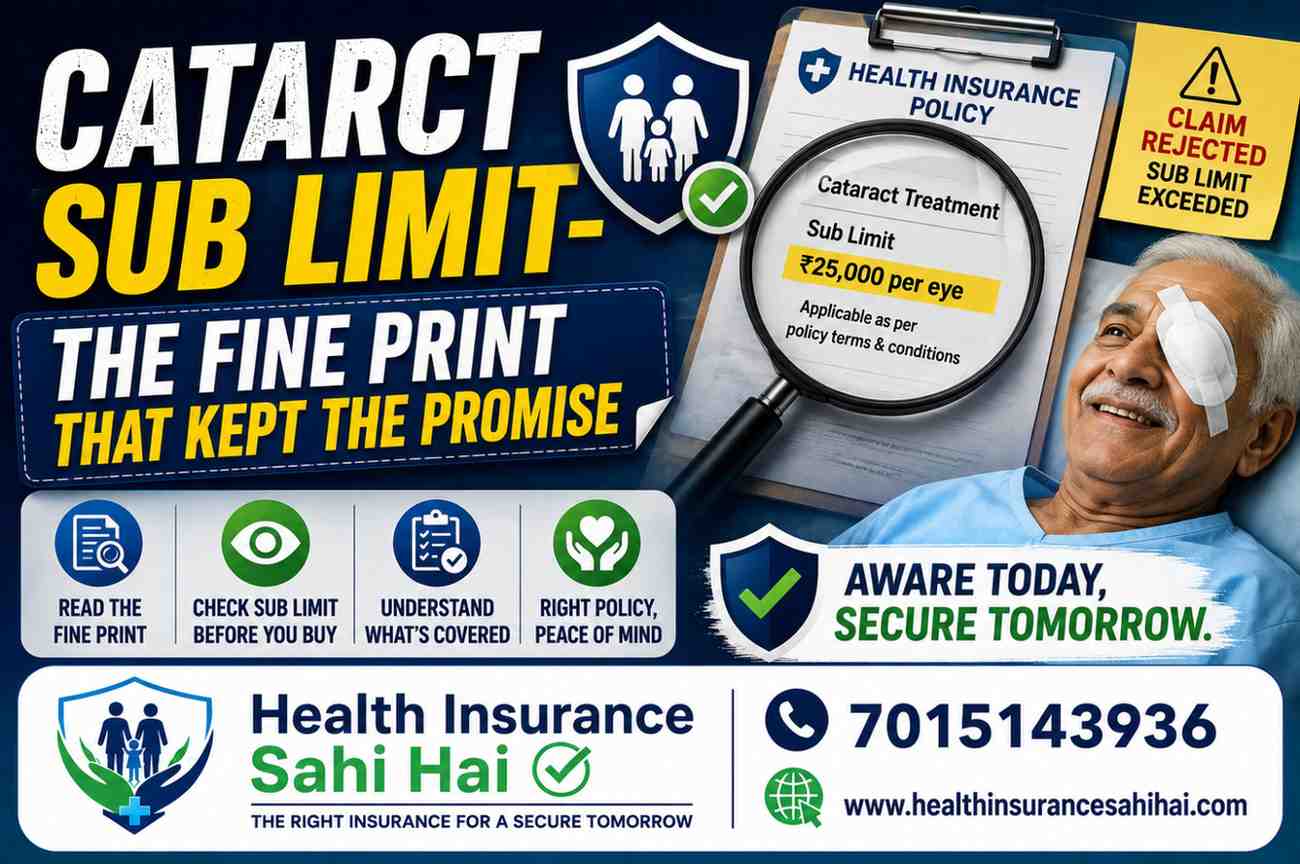
“Sir, my father’s cataract surgery cost me sixty-two thousand rupees, and your company only paid forty thousand. What kind of insurance is this?” The voice on the other end belonged to Meenal, a schoolteacher from Nashik, and it cracked somewhere between anger and disbelief. “I paid my premium every year without missing a single date. Is this how you repay loyalty?”
Rajesh had answered a hundred calls like this one. He knew the script — the polite acknowledgment, the reference to policy clause 4.2, the gentle reminder about “sub-limits as per your plan.” But this time, something made him pause. Instead of reading from the script, he asked Meenal if she had ten minutes to actually understand why the limit existed, not just that it did.
She was skeptical, but she stayed on the line.
Rajesh began the way he always wished someone had explained it to him when he first joined the industry — not with jargon, but with a picture.
“Imagine,” he said, “a large village well. Every household in the village contributes a small amount of water to that well every month — that’s your premium. In return, whenever a family faces a real emergency — a fire, a flood, an illness — they can draw water from that well to cope. That’s the entire idea of insurance: many people pooling small amounts so that few people, when disaster strikes, can draw large amounts.”
Meenal said nothing, so he continued.
“Now imagine that cataract surgery — a procedure almost every person eventually needs as they age — became something people started drawing from that well casually. Not because it’s wrong to need it, but because the cost of the procedure varies wildly. A basic, medically sufficient cataract surgery with a standard intraocular lens might cost fifteen to twenty-five thousand rupees in a good hospital. But the exact same surgery, using a premium imported multifocal lens purely for the convenience of not wearing reading glasses afterward, can cost eighty thousand or more. Both patients walk out of the hospital seeing clearly. Only one of them needed the insurance pool to cover the difference.”
“So you’re saying my father shouldn’t have gotten a better lens?” Meenal asked, her voice sharpening again.
“No,” Rajesh said carefully. “I’m saying the well has to survive for the next family that needs it too. If every cataract claim in the country was paid at the highest possible lens cost, actuaries calculate that premiums for basic health insurance would need to rise by a meaningful percentage almost every year — not because people are sicker, but because the industry-wide average claim payout for a single, predictable, almost universally-occurring procedure keeps climbing. And when premiums rise sharply, the people who get pushed out first aren’t the wealthy. They’re families like the one that called me last month, who could barely afford a five-thousand-rupee annual premium in the first place.”
That night, after the call ended, Rajesh sat at his desk far longer than usual. He pulled up the company’s actuarial dashboard — something he rarely did outside of quarterly reviews — and looked, really looked, at the cataract claims data for the past five years.
The numbers told an uncomfortable but honest story. Cataract surgery was, by volume, one of the single most frequently claimed procedures in Indian health insurance — largely because India has one of the highest cataract prevalence rates in the world among people over sixty, and improved awareness meant more people were getting operated on than ever before. It was also, unlike a heart attack or a road accident, a planned, non-emergency procedure. That combination — high frequency, elective timing, and enormous price variation between the “medically necessary” version and the “premium comfort” version — made it uniquely vulnerable to cost inflation across the entire industry, not because of fraud, but because of unregulated pricing at some hospitals and a natural pull toward “since insurance is paying, why not the better lens.”
Rajesh thought about his own mother, who had gotten her cataract surgery done two years ago with a standard lens, and had been perfectly happy with the outcome. He thought about how easily that decision could have gone differently if a hospital administrator, sensing an insured patient, had gently suggested the premium lens “since it’s covered anyway.”
He began drafting an internal note — not a defense of the sub-limit, but an honest account of both its purpose and its cost to policyholders like Meenal.
The next morning, Rajesh called Meenal back, not because he had to, but because he wanted to finish what he’d started.
“I looked into it more carefully,” he told her. “You’re right that the sub-limit feels unfair in the moment — especially when you did everything correctly and still had to pay the difference. That frustration is completely valid. But I want you to see the other side too, because I think you deserve the full picture, not just my company’s justification.”
He explained it to her plainly: sub-limits exist to keep a shared pool of money sustainable for millions of policyholders, not just to protect insurer profits. But he also admitted, honestly, that sub-limits could be poorly calibrated — set too low in some plans, not updated in line with real hospital costs, or applied without enough transparency at the time of purchase. He told her that many customers, himself included before this call, never fully understood the sub-limit until the moment they needed it — which was, in his own words, “a failure of communication on our industry’s part, not just a policy design choice.”
Meenal was quiet for a moment. “I still think forty thousand felt low,” she finally said. “But at least now I understand it wasn’t random.”
“It wasn’t,” Rajesh said. “But your feedback is exactly why plans need to keep evolving — inflation-linked sub-limits, clearer disclosure at the point of sale, and more affordable top-up options for people who want higher coverage. The limit isn’t meant to say your father’s comfort doesn’t matter. It’s meant to make sure the next person’s emergency doesn’t get priced out of existence.”
Five Points: The Case For Cataract Sub-Limits
1. They protect the affordability of the entire risk pool. Because cataract surgery is claimed so frequently, even modest overpayment on each claim compounds across millions of policyholders, pushing premiums up for everyone — including those who can least afford the increase.
2. They curb price inflation driven by elective upgrades. Since cataract surgery is planned rather than an emergency, there’s more room for a patient (or hospital) to choose a costlier lens simply because insurance is covering it — sub-limits keep the “medically necessary” baseline separate from optional premium upgrades.
3. They reduce the incentive for opportunistic overbilling by some hospitals. Uncapped, undifferentiated payouts for a high-frequency procedure have historically attracted inflated billing practices at a subset of facilities; a sub-limit anchored to reasonable, standard costs discourages this pattern industry-wide.
4. They allow insurers to keep base premiums lower for low- and middle-income buyers. Removing sub-limits entirely would require raising premiums across the board to compensate for higher expected payouts — sub-limits let insurers offer more accessible entry-level plans.
5. They still cover the medically essential need — they don’t deny the claim. A sub-limit isn’t a rejection; it fully covers a standard, clinically sufficient cataract surgery. It draws a line specifically at optional, comfort-driven upgrades, which keeps “your actual need” protected while treating “your preference” as separately fundable.
Five Points: The Case Against Cataract Sub-Limits (or Their Current Design)
1. Sub-limits are often set too low relative to real hospital costs. In many cities, even a standard lens and procedure can exceed outdated sub-limit figures, leaving policyholders with unexpected out-of-pocket costs for entirely ordinary treatment.
2. Disclosure at the point of sale is frequently inadequate. Many buyers, like Meenal, only discover the exact rupee cap at claim time, not at purchase — undermining informed consent and trust in the product.
3. They can create a two-tier experience that feels punitive rather than protective. Even when the logic is sound, a policyholder who paid premiums faithfully for years can experience a sub-limit as betrayal in a moment of vulnerability, regardless of the actuarial reasoning behind it.
4. Regional cost variation isn’t always reflected. A flat national sub-limit doesn’t account for the fact that a standard surgery in a metro city may genuinely cost more than the same procedure in a smaller town, disadvantaging urban policyholders unfairly.
5. They can be manipulated as a cost-control tool rather than a fairness tool. Without regulatory oversight, some insurers could set sub-limits primarily to protect margins rather than genuinely reflect the actual cost of medically necessary care — blurring the line between sustainable pricing and profit protection.
Rajesh never sent his internal note up the chain that week. But six months later, when the company revised its cataract sub-limit policy — indexing it to city-tier hospital cost data and adding a clear, plain-language disclosure page at the point of purchase — he liked to believe that one honest phone call, and one teacher from Nashik who refused to just accept the script, had something to do with it.
Because in the end, insurance isn’t just a contract. It’s a promise renewed every year by millions of people who trust that when their turn comes, the well will still have water in it — for them, and for the family standing behind them in line.